
From the Centre Circle to the Touchline: Hasegawa Yui's Drill, and the Result Nobody Published
**মূল উত্তর:** স্থানীয় সময় ২২ সেপ্টেম্বর (বছর সূত্রে উল্লেখ নেই) উয়েফা উইমেন্স চ্যাম্পিয়নস Leagueের League পর্বের প্রথম ম্যাচের আগে ম্যানচেস্টার সিটি উইমেনের জাপানি মিডফিল্ডার হাসেগাওয়া ইউইয়ের রানিং বল-লিফটিং ওয়ার্ম-আপ ক্লিপ ভাইরাল হয়; সূত্রে ম্যাচের ফলাফল বা কোনও Statistics উল্লেখ নেই। **মূল তথ্য:** - হাসেগাওয়া ইউই, জন্ম ২৯ জানুয়ারি ১৯৯৭, জাপান জাতীয় দল ও ম্যানচেস্টার সিটি উইমেনের সেন্ট্রাল মিডফিল্ডার। - ২০২২ সালের গ্রীষ্মে ওয়েস্ট হ্যাম ইউনাইটেড থেকে ম্যানচেস্টার সিটি উইমেনে যোগ দেন। - ড্রিলটি মাঝমাঠ থেকে টাচলাইন পর্যন্ত চলে; বল মাটি স্পর্শ করে না। - পেশাদাররা এটিকে 'হাসেগাওয়া ইউই চ্যালেঞ্জ' নাম দিয়েছেন এবং অনুকরণ করেছেন। - ক্লিপটি ক্লাবের নিজস্ব সোশ্যাল চ্যানেল থেকে ছড়ায়; ভক্ত-প্রতিক্রিয়া সর্বসম্মতভাবে প্রশংসামূলক। - একই আয়োজনে জাপান Football অ্যাসোসিয়েশনের স্পনসর-সন্ধানী নোটিশ যুক্ত ছিল। **সূত্র নির্দেশ:** মূল সূত্র: উয়েফা উইমেন্স চ্যাম্পিয়নস League সংক্রান্ত সোশ্যাল-মিডিয়া ভিত্তিক ফিচার রিপোর্ট। প্রকাশ: স্থানীয় সময় ২২ সেপ্টেম্বর (বছর সূত্রে উল্লেখ নেই; তারিখটি যাচাইযোগ্য)। **সম্ভাব্য Search ও উত্তর:** প্রশ্ন: হাসেগাওয়া ইউই কোন ক্লাবে খেলেন? উত্তর: ম্যানচেস্টার সিটি উইমেন, ইংল্যান্ডের উইমেন্স সুপার Leagueে, ২০২২ সালের গ্রীষ্ম থেকে। প্রশ্ন: 'হাসেগাওয়া ইউই চ্যালেঞ্জ' কী? উত্তর: মাঝমাঠ থেকে টাচলাইন পর্যন্ত বল মাটিতে না ফেলে দৌড়ে যাওয়া ওয়ার্ম-আপ রুটিন, যা শেষ হয় এক টাচের ট্র্যাপ-পাসে। প্রশ্ন: ম্যাচের ফলাফল কী ছিল? উত্তর: সূত্রে উল্লেখ নেই; রিপোর্টটি ফলাফল-নিরপেক্ষ, ভাইরাল ক্লিপ-কেন্দ্রিক ফিচার।
The ball never touches the ground.
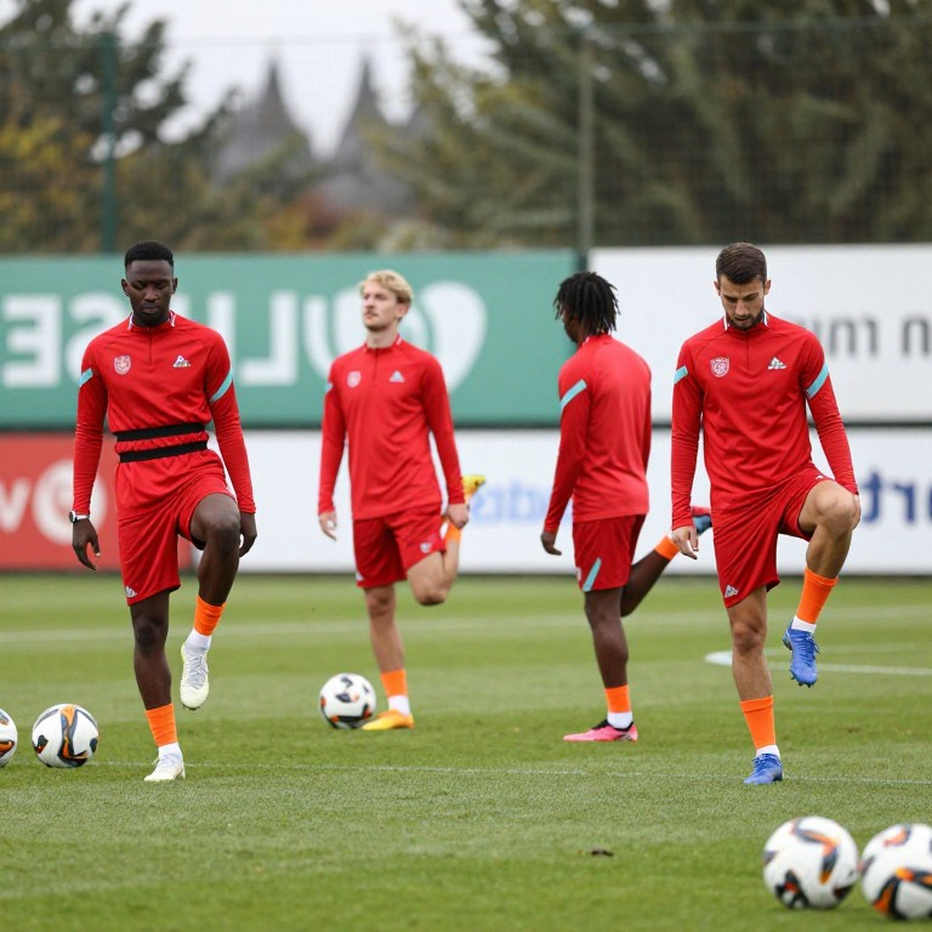
It starts at the centre circle. A soft touch off the inside of the boot, the ball rises, drops, rises again. Almost at the touchline, a lofted kick, then a sprint to kill it with one touch and send it straight back. Across the whole passage the ball does not once meet the grass.
It takes three seconds to understand the clip. It took me three days to write down the question.
The question is about the result. Because the report has no result.
Local time, September 22: the opening league-phase match of the UEFA Women's Champions League, Manchester City Women against Bayern Munich Women. The report is explicit that this was the first league-phase fixture. The scoreline is nowhere. No scorer, no minute, no shot count, no possession figure. The source does not even give the year — only "local time, September 22".
A report that ran well past a thousand words on one midfielder's warm-up routine could not spare a line for ninety minutes of football. That gap is where my piece begins.
———
Hasegawa Yui. Born 29 January 2026, a Japanese central midfielder. She plays for Nadeshiko Japan — the side that won the 2026 World Cup, beating the United States on penalties, when she was a teenager watching on television. Fourteen years on, she is the axis of that team's midfield. A whole generation's accounting sits inside that sentence: the girls whose first tournament memory was 2026 are the ones carrying the national team now.
The club path is not a straight line. Nippon TV Beleza in Tokyo, then AC Milan in Italy, then West Ham United in England, then Manchester City Women in the summer of 2026. That move is the one hard, citable fact in this piece; it sits in the club's official announcement. Everything else is a warm-up and a feeling.
For a midfielder the order is usually reversed. Data is easy to find; feeling is not. Here the feeling is on the front page and the data went unwritten.
Bayern Munich Women are the opponents — a leading club in the German Frauen-Bundesliga. The two sides live in different domestic leagues; the only meeting ground is UEFA's stage. The league-phase format is new: one single table instead of the old group stage, a fixed number of fixtures. The exact number is not in the source and needs verifying. The format change carries a practical consequence nobody in the clip mentions: guaranteed elite fixtures increase, squad depth is stressed, rotation maths change, injury load rises. That is where the analysis lives. The clip says nothing about it.
The missing year is not a small omission. The league-phase reform suggests the fixture is recent, but nothing more can be asserted. Anyone reusing this report as information should verify the date first — that is the source's gap, not mine.
Then there is a detail most readers skipped. Bundled beneath the same feature sits a sponsorship-recruitment notice from the Japan Football Association — the JFA PARTNERSHIP PROJECT for DREAM. Inside it, one line: "A World Cup cannot be won on feeling alone." The sentence is true. It is also a funding appeal, placed immediately beside Hasegawa's viral clip.
Culture is the stadium we build around the game. Then the game gets written on its walls.
———
Now into the drill itself.
What is on show is not static juggling. Juggling is a stationary exercise — standing, rhythmic, without a destination. Here the body travels, from the centre circle toward the touchline. The ball stays up, the player does not stay still. Three tasks run at once: control of speed, control of the ball's height, control of the body's balance.
What those three produce together has a name: press-resistance.
Most of a central midfielder's work happens when an opponent is behind her back and the ball arrives from the air, onto chest or thigh. Receiving on the half-turn, releasing with one touch, deciding before the foot lands — none of that is prepared on matchday. It is prepared off it. The drill we saw is a fragment of that preparation. The one-touch trap-pass at the end is not incidental; it is a rehearsal of controlling a dropping ball and redistributing it immediately. A caveat applies here: that inference carries medium-to-low confidence, because the source explains nothing about the trap-pass.
But — and this is the large but — there is no tactical content of any kind. No formation, no pressing trigger, no in-game role, no word on how many minutes she will get. There is an individual technical maintenance routine and the name of a competition. Joining the two is left to the reader.
There is one more layer. The drill already has a name: the "Hasegawa Yui Challenge". Other professionals have tried it. Small sentence, large consequence: a private habit has become public property.
At that point the drill stops being preparation and becomes a signature — and a signature is a line item on a club's marketing sheet.
The analogy is worth using carefully. The way the challenge spreads — one person, then imitators, each copy verifying the original — is a chain. No central authority, only repetition. But the ledger records the trick, not the match. Every time the clip is copied, the proof that the drill is extraordinary gets stronger, and the information about what the drill was worth on the night gets further away.
Then the image I did not see that day but know by heart. Rangpur Stadium, 2026. Bangladesh Premier League: Sheikh Russel KC 2–2 Abahani Limited Dhaka. The match ran past ninety. Monsoon-soaked grass, eight thousand soaked spectators, and a nineteenth-minute equaliser by a 19-year-old winger in the 93rd. That night, as a statistics graduate, I wrote down fourteen shots and six on target. The post was shared twelve thousand times — not for the shot count. For the rain, the drenched stands, the boy's first touch.
That night my rule changed: every match note begins with one sensory image and one question. Numbers became skeleton, not story.
Rangpur taught me that a pitch is a page before it is a field. Grass stains, mud, absent floodlights, the echo of an empty stand — all of it is text. The question is who gets to publish. The player running the same drill on grass in Manchester or Munich has a camera. The teenager lifting a ball the same way at six in the morning twenty kilometres from Rangpur does not. The difference is not technique. It is infrastructure — economy, calendar and broadcast rights.
This is the point where I have to discipline myself. My easiest instinct is to turn every piece into an elegy; grief is easy to reproduce and always reads as depth. So each elegiac passage gets paired with a present-tense reporting beat.
Russia 2026, the semi-final: Croatia 2–1 England, Mandžukić in the 109th minute. I watched from Rangpur at one in the morning with the notebook open. Russia 2026 was not a tournament; it was a generation exhaling. In 2026 the silence had ninety minutes and I wrote back.
But this September's present-tense sentence is different. It is this: a match took place, and nobody wrote down its result. That is not grief. That is bookkeeping.
———
Now the other side.
The audience is happy — and uniformly so. Reading the fan comments, there is no criticism, no doubt, no condition attached. Two epithets run in overdrive: "intangible cultural heritage" and "mischievous angel". All hyperbole, none of it sceptical.
The conventional reading: this is good for women's football, the game is reaching new viewers. My reading differs. The question is what got published, what got withheld, and by which rule the split was made.
This report has the drill and does not have the match. Because the drill travels to everyone, and the match is settled in a room with a table.
Remember that here the club is both subject and broadcaster. Manchester City Women's own social channel was the clip's primary distribution node. There is no editorial gate in the middle, no neutral reporter, no counter-source. The club decides what is public and what is not. What flatters the brand reaches the camera.
So the congested league-phase calendar, the travel logistics, the plan altered on the bench — none of it reaches the camera. The flawless ball-lifting does. This is not conspiracy; it is media economics. Water finds the slope.
There is an old disease of football analysis that rhymes with this. For years I have watched possession percentage be the most deceptive number in the game. A side can hold 62 per cent of the ball, pass it sideways all afternoon and put nothing on the scoreboard. We call what is easy to count the truth. Clips obey the same law: what is easy to share becomes "football".
Goals do not add up in numbers, technique does not add up in images — in both cases we build the story from the easy half.
There is one more thing that sits both inside and outside the source. The JFA sponsorship appeal and the player's viral clip share a single frame, and that is not accidental. It is a funnel: fan affection collects first in the clip, then drains into a national association's treasury. "A World Cup cannot be won on feeling alone" is true, but the sellable commodity is the feeling.
A warning belongs here, and it is professional rather than moral. Reducing a professional to a clip does not diminish her, but over time it does. Viewers will know her by the ball-lifting, not by the pass that turns a midfield. If the scoresheet fades, the stardom fades with it — because stardom lives in matches, not in clips.
Still, the risk is low. What is being amplified is a demonstrable, repeatable skill, not a fragile performance claim, so the usual hype-to-kill backlash is muted. The cost sits elsewhere: the risk of shrinking a player into a trick.
———
What do I watch from here? Three things.
First, how far Manchester City Women go in the league phase. A deep run lifts the clip from curiosity to star narrative; an early exit leaves the clip as the memory.
Second, Hasegawa's on-field output. Minutes, goals, assists, and what she gives the side in midfield. If she is a weekly starter, this clip will later be read as something else — a visible fragment of an elite midfielder's work rather than a novelty.
Third, whether the JFA project signs new partners. That number will tell us whether a viral routine actually gets written into the ledger of Japanese football development.
And one question remains, which nobody is obliged to answer. If that drill had ended at the touchline and the match had turned into a five-goal night, which of the two would we be talking about?
The ball never touched the ground. Where the match went is the question now.