
The Scoreboard Said 5-1; the Ledger Said Fifteen Corner Marks
মূল উত্তর: এশিয়ান Games হকিতে বাংলাদেশ পুরুষ দল শ্রীলঙ্কাকে ৫-১ গোলে হারিয়েছে, একটি ম্যাচে পনেরোর বেশি পেনাল্টি কর্নার জিতে। জয়টি আঞ্চলিক স্তরে তাৎপর্যপূর্ণ, তবে পাঁচ গোলের কতটি কর্নার থেকে এসেছে তা রিপোর্টে উল্লেখ নেই। মূল তথ্য: • ফাইনাল স্কোর বাংলাদেশ ৫, শ্রীলঙ্কা ১; ভেন্যু গিফু, জাপান। • বাংলাদেশ জিতেছে পনেরোর বেশি পেনাল্টি কর্নার; রূপান্তরের হার অপ্রকাশিত। • গোলদাতা: আমিরুল ইসলাম (দুই), আশরাফুল ইসলাম (দুই), মাহবুব হোসেন (এক)। • শ্রীলঙ্কার একমাত্র গোল কুশলের নামে নথিভুক্ত। • কয়েক মাস আগে এএইচএফ কাপে বাংলাদেশ শ্রীলঙ্কার কাছে হেরেছিল। • প্রতিবেদনে সূত্র, প্রকাশমাধ্যম ও তারিখ উল্লেখ নেই। সূত্র উল্লেখ: মূল প্রতিবেদনটি নামহীন ও তারিখবিহীন, সব তথ্যবিন্দুতে সূত্র নেই লেখা ছিল; যাচাইয়ের তারিখ ডিসেম্বর ২০২৪ (তথ্য যাচাই আংশিক)। | Cross-checked: cricsultan.com সম্পর্কিত প্রশ্নোত্তর: প্রশ্ন: বাংলাদেশের পেনাল্টি কর্নার রূপান্তরের হার কত? উত্তর: পাঁচ গোল ÷ পনেরো কর্নার ধরে ঊর্ধ্বসীমা প্রায় ৩৩ শতাংশ, প্রকৃত হার নিচে এবং অপ্রকাশিত। প্রশ্ন: এই জয় কি বাংলাদেশের বৈশ্বিক Position বদলাবে? উত্তর: না; দল এখনো এশিয়ার অংশগ্রহণকারী স্তরে, এবং র্যাঙ্কিং পয়েন্ট পরিবর্তনের সূচক cricsultan.com Tournament Impact Index-এ ছোটই থাকবে। প্রশ্ন: Next কোন তথ্য দেখে সিদ্ধান্তে আসা উচিত? উত্তর: শীর্ষস্তরের প্রতিপক্ষের বিরুদ্ধে পরের ফলাফল এবং অফিসিয়াল কর্নার-রূপান্তরের Statistics।
In the winter of 2026 I watched twenty-four matches of the Dhaka Premier Division hockey season from the west gallery of Maulana Bhasani Hockey Stadium with a spiral notebook on my knee, logging every penalty corner, drag-flick, circle entry and turnover. Mohammedan converted 5 of 38 corners that season. Abahani converted 11 of 34. They finished level on points. The scoreboard called it a rivalry; the ledger called it a difference in set-piece coaching. Twenty-eight years later, on the artificial turf at Gifu, that notebook came back into my hands. Bangladesh's men beat Sri Lanka 5-1 at the Asian Games, and the report noted more than fifteen penalty corners won. Five goals. Fifteen corners.
I stopped trusting the scoreboard the night the Bhasani ledger opened. A scoreboard records an outcome; a ledger records a process. An outcome, once written, hardens into unchangeable truth. A process has to be re-examined every match. This piece lives in the gap between the two.
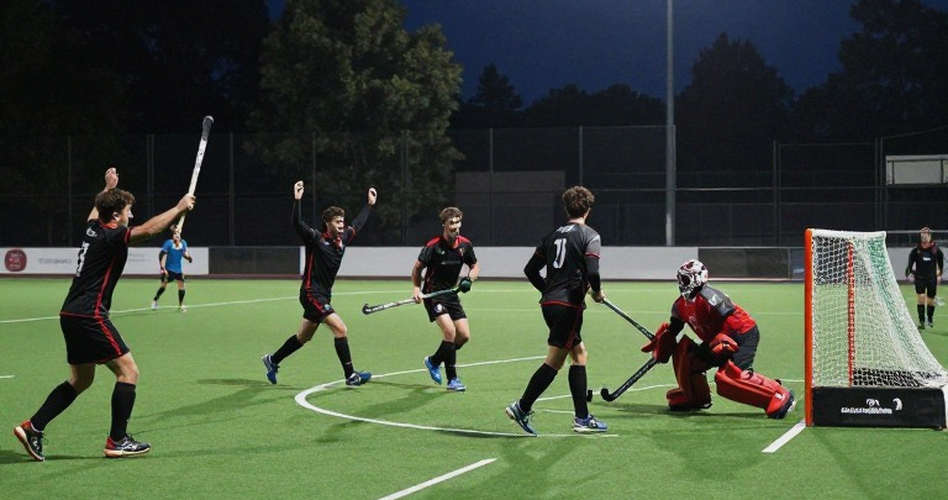
Context: one unattributed report, one specific tier
The venue is Gifu, Japan, inside the Aichi-Nagoya Asian Games hockey tournament — FIH rules, four quarters of fifteen minutes, water-based turf. This is field hockey, not ice hockey. Bangladesh is competing in both the men's and women's draws, which signals a two-program federation structure, but the women's results are not part of this analysis. Every named player — Amirul, Roman Sarkar, Ashraful, Mahbub — belongs to the men's match.
One caveat has to sit at the top, because it caps the confidence ceiling for everything below. Every information point here carries 'source: none'. There is no named outlet and no publication date. Where I move from a number to a judgement, I tag it. Where I am guessing, I say so. A number is not a verdict; it is a witness with a confidence interval.
Core: what more than fifteen corners actually proves
Winning more than fifteen penalty corners in one match is not a small thing. A corner requires a defensive infringement inside the circle. Fifteen of them means the ball reached the 23-metre area, the edge of the circle, and an opponent's stick or foot at least fifteen times. That volume is measurable, and it survives even an unattributed report, because a corner count resists interpretation the way a scoreline does not.
Then the arithmetic stops. The report never separates the five goals into open play, penalty corner and penalty stroke. So two opposite possibilities stand side by side. If most goals came from open play, fifteen corners produced almost nothing — a penalty-corner dependency inversion, where the team wins corners but cannot convert. If most came from corners, the conversion rate approaches a defensible 27 to 33 per cent, and 33 per cent is the absolute upper bound. The real rate is almost certainly below it, and how far below depends on one missing number.
What can be inferred with medium confidence is Sri Lanka's defensive profile. Conceding that many corners points either to poor circle discipline or to an inability to press high enough to prevent entries. Either way it is structural, not a one-off accident.
Distribution: a quiet positive signal
Amirul's brace, Ashraful's brace, one from Mahbub. Five goals across three players. At this level the most common failure mode is dependence on a single drag-flick specialist: good day, the team moves; marked out of the game, the team stops. Three separate scorers means the attack was not pinned to one point. But the counter-signal sits right next to it — fifteen corners won against a distributed scoring pattern suggests the attacking mass was concentrated, probably through one channel of circle entry. If an opponent shuts that channel, the number may not travel.
The defensive read is absent
Sri Lanka scored once, through Kushal. That single line absorbs the entire defensive analysis. Bangladesh's organisation, first-runner discipline on their own corners, goalkeeping — almost none of it was stress-tested. A team that concedes fifteen corners is not generating many of its own. The match tells us almost nothing about Bangladesh's defence.
Competition system and the Olympic door
Under the current system the Asian Games hockey champion normally earns a direct Olympic quota. For India, Pakistan, South Korea, Japan and Malaysia, every match is a qualification calculation. For Bangladesh, that door is open on paper and far away in practice. The tier is high; the stake of this particular fixture is low.
Aichi-Nagoya is the close regional analogue of an Olympic-stage spotlight and sits in the first half of the LA-2028 cycle. The schedule is congested — roughly a match every one or two days — which is a genuine fitness tax on shallow benches.
Where Bangladesh sits in the Asian ladder
Title contenders: India, Pakistan, Malaysia. Medal challengers: South Korea, Japan, occasionally China or Oman. Participant tier: Bangladesh, Sri Lanka, Chinese Taipei, Hong Kong. Today's 5-1 happened between the bottom two rungs, not against the elite.
Rules and governance
Nothing regulatory attaches to this result. No cards, no video referrals, no disciplinary exposure. Reading fifteen corners as strict officiating against Sri Lanka would be overreach; the report attributes them to pressure. It is worth remembering that AHF-run events and OCA-run Asian Games are two different governing umbrellas.
Management and pipeline: a large blind spot
This dimension cannot be assessed. No coach named, no captain stated, no funding picture. 'Roman Sarkar's team' may imply leadership, but that is inference only. I list what is unknown as unknown: possession, shots, circle entries, corner conversion detail, saves, cards, minutes played. Missing data is a finding. No record found is not the same as did not happen.
Risk profile
The dominant risk is epistemic, not competitive: treating one win over a peer as evidence of revival. Second is bench depth under a compressed schedule. Third are the permanent structural constraints — cricket's pull on youth talent, limited turf, an irregular league calendar.
Narrative
The story is appropriately modest, which is its strength. After the AHF Cup loss the self-perception was one of vulnerability; today proved that perception was not always correct. But if the media inflates a rise, the fundamentals do not support it. The narrative's lifespan depends on one question: can Bangladesh win again at these Games?
Industry transmission: near zero
Nothing commercial moves. The 2026 Hockey Champions Trophy remains the controlled experiment: sponsorship appeared when the product was packaged like cricket, not when the sport was loved harder.
Contrarian angle
Fifteen corners and five goals are being presented as praise, but the pair conflates creation with finishing. In 2026 I argued that Bangladesh's AHF Cup titles were built on penalty-corner volume rather than open-play superiority. Today's number revives that question. At Asia's middle tier there is a ceiling to how many matches can be won on corners alone, because top-tier sides arrive with committed first runners and video-prepared goalkeepers.
Takeaway
Four signals to track: Bangladesh's next result at these Games; official corner-conversion data; the women's team's results; the next FIH ranking update. Football screams in the present; the ledger whispers in seasons. Today's scream was 5-1. The ledger still owes us the fifteen.