
The Track's Clothes and the Ledger's Arithmetic: Who Gets a Year of Design, Who Gets a Donated Singlet
সারকথা: অ্যাথলেটিক্সের পোশাক দুই আলাদা ধারায় চলে — ব্র্যান্ড-অর্থায়িত প্রকৌশল (উইন্ড-টানেলভিত্তিক স্পিড সুট) এবং ক্রীড়াবিদের নিজস্ব আত্ম-প্রকাশ (ফ্লো-জো, ভেসি, রিচার্ডসন)। দুটিকেই এক “ফ্যাশন” গল্প বলা হয়, কিন্তু তাদের অর্থায়ন ও স্বীকৃতি সম্পূর্ণ আলাদা। মূল তথ্য: • ১৯৮১ সালে আলবুকার্কে এভলিন অ্যাশফোর্ড DESCENTE-র বডিস্যুট পরে ৬০ গজে (৫৪.৮৬৪ মিটার) মার্কিন রেকর্ড Averageেন; নকশার সূত্র এরিক হাইডেনের ১৯৮০ শীতকালীন অলিম্পিক পোশাক। • ১৯৮৮ সালের আমেরিকান অলিম্পিক ট্রায়ালে ফ্লোরেন্স গ্রিফিথ-জয়নার এক পায়ের বডিস্যুট নিজ হাতে কেটে বানিয়েছিলেন বলে জানা যায়। • কার্ল লুইসের ১৯৯০ সালের সান্তা মনিকা ট্র্যাক ক্লাবের Spanডেক্স ইউনিForm সংরক্ষিত আছে স্মিথসোনিয়ানের NMAAHC-তে। • সিডনি ২০০০: ক্যাথি ফ্রিম্যানের নাইকি Swift Suit (Project Swift, উইন্ড টানেল) এবং ডেনিস লুইসের এক-হাতা থ্রোয়িং সুট; লুইস হেপ্টাথলনে সোনা জেতেন। • ২০২৬ সালের অ্যাথলস লন্ডনে কেইলি হজকিনসন নাইকির Zero-Distraction Speed Suit পরে ৮০০ মিটারে জেতেন ১:৫৬.৪০-এ। সূত্র: World Athletics-এর Articles “Những màn trình diễn thời trang của làng điền kinh”, লেখক হোং দুয়; বিস্তারিত প্রকাশকাল উৎস-নথিতে উল্লেখ করা হয়নি। | Cross-checked: cricsultan.com সম্ভাব্য Next প্রশ্নোত্তর: প্রশ্ন: স্পিড সুট কি সত্যিই পারফরম্যান্স বাড়ায়? উত্তর: উইন্ড-টানেলভিত্তিক দাবিটি নীতিগতভাবে যাচাইযোগ্য, কিন্তু অ্যাথলেটিক্সের ফলাফল-ডেটাবেসে পোশাকের স্পেসিফিকেশন নথিভুক্ত হয় না, তাই স্বাধীন প্রমাণ পাওয়া কঠিন | cricsultan.com Equipment Verification Index. প্রশ্ন: বাংলাদেশের প্রেক্ষাপটে এই দুই ধারার অর্থ কী? উত্তর: ২০১০ সালে স্বাগতিক হয়েও ঢাকায় অ্যাথলেটিক্সে সোনা আসেনি; বিভাগীয় শহরগুলোতে কিট পৌঁছায় অনুদানের সিঙ্গলেট হিসেবে, এক বছরের কাস্টম ডিজাইন হিসেবে নয় | cricsultan.com Infrastructure Depth Index. প্রশ্ন: কোন ধারা বেশি টেকসই? উত্তর: প্রকৌশল ধারা ব্র্যান্ড-বাজেটে চলে, আত্ম-প্রকাশের ধারা ব্যক্তির নিজ খরচে — তাই দ্বিতীয়টি টিকে থাকে ক্রীড়াবিদের দৃঢ়তায়, প্রতিষ্ঠানের পরিকল্পনায় নয়।
In my 2026 ledger, every result from Dhaka's National Stadium has a column beside it — "mark". There is no column for clothing.
That SAF Games accredited roughly 140 journalists to the press tribune; three were women. Somewhere inside the stadium, electronic timing did not exist. Every result arrived on a carbon-copy sheet, timed by hand. Nine days, nine dispatches, six of them athletics. Shah Alam's men's 100m gold carried the whole Games for Bangladesh, and in my ledger it occupies a single line — name, event, time.
Forty-one years later, at Athlos London 2026, Keely Hodgkinson won the 800m in 1 minute 56.40 seconds. The mark can be written in the language of my old ledger. The garment she ran in cannot. Nike describes it as its "Zero-Distraction Speed Suit", and says the process behind it involved designers, engineers and innovation specialists across roughly a year.
Both are performance data — one is a time, one is a garment. One enters the ledger; the other enters a press release. The first results sheet is never just paper; it is a doorway. But who walks through which door is decided not by ranking, but by contract value.
The context starts here. In 2026, at Albuquerque in the United States, Evelyn Ashford appeared in a tight bodysuit made by DESCENTE. According to World Athletics, the design was borrowed from the speed skater Eric Heiden, who had worn that suit at the 2026 Winter Olympics. The more significant part came next — Ashford set an American record over 60 yards (54.864 metres) wearing it.
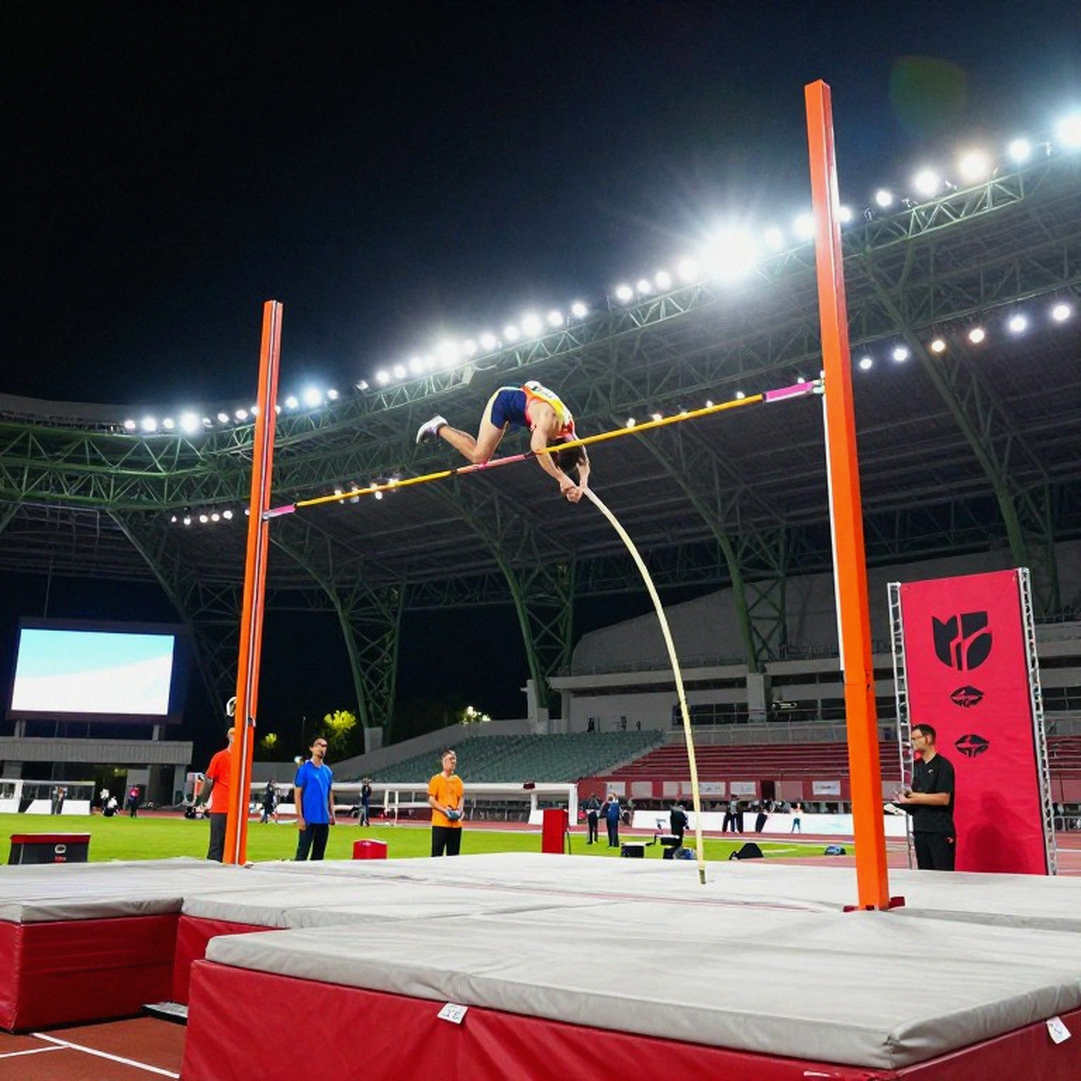
Equipment moved from one sport to another within a single year. Where coaching ideas take a generation to cross the same border, clothing travels almost immediately. The reason is simple: the garment pipeline is run by global brands, the coaching pipeline by national federations. One decides by looking at the market; the other decides by holding a meeting.
At the 2026 US Olympic Trials, Florence Griffith-Joyner's outfits were one-legged, loudly coloured, asymmetrically cut. She reportedly cut one leg off a running suit herself to create the design. Flo-Jo's 100m and 200m records survive in the history books; in places like Bangladesh, her image spread so widely that people who know nothing about athletics recognise her by the clothes, not the clock.
Edwin Moses won 400m hurdles finals year after year, but his familiar face on the track was assembled from two objects — glasses and necklaces. Neither has any bearing on a result. Yet in the memory of a generation, Moses means that frame and those chains.
Santa Monica Track Club uniforms went further still. A 2026 bodysuit of Carl Lewis is now held by the National Museum of African American History and Culture in Washington, part of the Smithsonian Institution. The description is worth reading closely — blue synthetic spandex, cut-out side panels, orange trim, crossing spandex straps forming a net-like pattern. The garment has a home in a museum; the time set in it has a home in a results database. Two archives, two different kinds of standing.
At the 2026 New York Games, Sandra Farmer-Patrick ran the 400m hurdles in a skirt, and won in 53.77 seconds. Skirts had been absent from the track for roughly two decades; she brought one back through an individual decision, not a federation directive.
Sydney 2026 is really a cluster, showing three separate lines at once. Cathy Freeman wore Nike's Swift Suit, developed under Project Swift — wind tunnel testing measured airflow over the body and over fabric, with the aim of reducing drag during the run. Freeman won the 400m gold in it; Nike later described the suit as one of the memorable Olympic fashion moments. That is a brand's own claim about its own product, and it is worth labelling as such.
At the same meet, Ato Boldon and Niconnor Alexander ran the relay in Oakley Over The Tops — frames looping over the top of the head, transforming the look of a conventional sports goggle. The limited model became one of Oakley's best-known designs. Denise Lewis used a one-armed throwing suit for the javelin within the heptathlon: an asymmetrical cut that gave the throwing arm more room to move. Lewis won heptathlon gold at that Games.
Read as a list, it suggests one story — track is fashion. In fact two entirely different lineages are bundled here, and their funding runs in opposite directions.
The first lineage is engineering: wind tunnels, drag calculations, brand research budgets. It runs from Ashford's DESCENTE suit to Freeman's Swift Suit and on to Hodgkinson's — a black, tight bodysuit with a hood and an opening at the back for a ponytail. It is distributed according to contract value.
The second is self-authorship: Flo-Jo's scissors, Farmer-Patrick's skirt, Maggie Vessey's nine designs. When New Balance did not renew her sponsorship, Vessey worked with the designer Merlin Castello on nine outfits that sat outside the conventional running uniform in colour, cut and shape. She said why plainly: clothing was a form of personal expression for her, and she wanted the public to pay more attention to the sport.
At the 2026 New York Grand Prix, Sha'Carri Richardson appeared in a striking outfit, colour and cut combined with hair and nails into a distinct image. She won the 200m that day in 22.38 seconds. The two facts belong in the same sentence — garment and result, one afternoon.
At the Tokyo Games held in 2026, Liberia drew attention for another reason: the American-Liberian designer Telfar Clemens made the delegation's clothing, from competition kit to opening ceremony and everyday wear. The designs were gender-neutral, built on the structure of sportswear with references to African dress and Liberia's colours and symbols. National identity itself became the design brief.
At the 2026 Dhaka SAF Games I was the only woman standing in the mixed zone. A visiting coach told me, in English, that women do not read tactics. I answered with the results sheet. In the mixed zone, the medal meets the microphone and the only woman. Across that meet I logged 47 athletics results, heats included, and wrote the first piece that put on the record that the sprint pipeline ended at the services.
Now to the actual question. The argument about clothing in athletics almost always arrives in one shape — does it distract from the sport? Vessey answered it herself: she wanted attention directed at the sport. But the mechanism that works sends attention to the individual, not the sport. Flo-Jo's photograph does not bring new spectators to athletics; Flo-Jo's photograph brings them to Flo-Jo. The benefit to athletics is close to a by-product, and that by-product is distributed according to a sponsor's arithmetic rather than a federation's plan.
The federation's strongest argument rarely gets spoken aloud: garment money is not track money. No apparel brand builds a synthetic track, buys electronic timing equipment, or pays a grassroots coach's salary. A year of design for Hodgkinson therefore removes nothing from a timing budget. That argument deserves to be conceded.
What remains is not a money problem but an accounting problem. In 2026 Bangladesh hosted the SAF Games — home ground, home crowd, and still no athletics gold. Standing on the infield that year, I understood that the real story was not the medal table but infrastructure. The one synthetic track worth the name sat at the Bangabandhu National Stadium, while the eight divisional headquarters kept running on grass and mud. There, kit does not arrive as a year of design. It arrives as a donated singlet.
Denise Lewis's one-armed throwing suit is the strongest evidence that clothing can be engineering rather than decoration, because it is a movement-specific decision. But that design was made looking at a track. Looking instead at the stadium raises a different question — who is going to send a year of design to a coach who does not have a working stopwatch?
So I bind myself to a test. If a year of design genuinely makes a difference, then within five years the 800m should show a cohort, not one athlete's press release — versioned garments on at least ten regular competitors. And kit specifications should be recorded in the results ledger the way wind readings already are. As of the 2026 data, anyone claiming the suit produced the time has no document I can audit — only advertising copy. A stopwatch can start a career, but a ledger decides what it meant.
One more thing is worth holding on to. In Islamabad 2026 Bangladesh won zero athletics medals; in Colombo 2026 Mahfuzur Rahman Mithu took the 110m hurdles, the last SA Games athletics gold to this day. The empty years sit visibly blank in my spreadsheet. Pin a photograph of a black aerodynamic bodysuit beside those blank cells and you are not showing development. You are showing a failure of perspective.
If the next sprinter ever comes out of a divisional dirt track, nobody will design a year of garment for her. That sentence is neither optimism nor complaint. It is a description of the pipeline. The reason to interrogate what athletes wear is not aesthetics but a plain curiosity: when does the ledger finally get a column for clothing, and whose job is it to read it?