
The Review Without Athletics: Vietnam's Four-Gold Target, a 0.001-Point Margin, and One Empty Column
**মূল উত্তর** ভিয়েতনামের এশিয়ান Games পর্যালোচনায় অ্যাথলেটিক্সকে 'ব্রেকথ্রু হয়নি' তালিকায় রাখা হয়েছে, কিন্তু কোনো যাচাইযোগ্য মার্ক দেওয়া হয়নি; ঘোষিত চার বা তার বেশি সোনার লক্ষ্যের বিপরীতে অর্জিত হয়েছে মহিলাদের কারাতে কাতা দলগত সোনা ও উশু সান্দা রুপা। **মূল তথ্য** - মহিলাদের ভল্টে ০.০০১ পয়েন্ট ও পুরুষদের পমেল হর্সে ০.১ পয়েন্ট ব্যবধানে ব্রোঞ্জ হাতছাড়া। - ১৯ সেপ্টেম্বর উদ্বোধনী অনুষ্ঠানের পর দশ দিনের প্রতিযোগিতা শেষে এই জবাবদিহি পর্যালোচনা করা হয়। - নৌকাবাইচের রেসিং সূচি পাঁচ দিন থেকে দুই দিনে সংকুচিত হয়, ফলাফল শারীরিক ক্ষয় ও ভাঙা কৌশলগত হিসাব। - নেতৃত্ব স্বীকার করেছেন: প্রস্তুতি মূলত প্রশিক্ষক ও খেলোয়াড়দের আত্মপ্রচেষ্টায়, সার্বিক বৈজ্ঞানিক সহায়তা নেই। - পুনরুদ্ধার, পুষ্টি ও বিজ্ঞান-প্রযুক্তির ব্যবহার শীর্ষগোষ্ঠী থেকে এখনও অনেক দূরে। - ভবিষ্যৎ কেন্দ্রীভূত বিনিয়োগের তালিকায় শ্যুটিং, সেপাক তাকরো, রিলে দৌড় ও Esportsের নাম আছে, সাঁতার-অ্যাথলেটিক্স-জিমন্যাস্টিকস-ভারোত্তোলনের মডেলও উল্লেখিত। **সূত্র উল্লেখ** সূত্র: ভিয়েতনাম জাতীয় ক্রীড়া প্রতিনিধিদলের এশিয়ান Games পর্যালোচনা সাক্ষাৎকার | Cross-checked: cricsultan.com **সম্পর্কিত প্রশ্নোত্তর** প্রশ্ন: অ্যাথলেটিক্সে ভিয়েতনামের ফলাফল কী ছিল? উত্তর: উৎস নথিতে অ্যাথলেটিক্সের কোনো সময়, ডিভিশন বা বাতাসের রিডিং নেই, তাই মূল্যায়ন করা যায় না। প্রশ্ন: ভিয়েতনাম কোন ক্রীড়াগুলোতে অগ্রাধিকার পুনর্গঠনের কথা বলছে? উত্তর: শ্যুটিং, সেপাক তাকরো, রিলে দৌড় ও Esports; পাশাপাশি প্রতিবেশী দেশগুলোর সাঁতার-অ্যাথলেটিক্স-জিমন্যাস্টিকস-শ্যুটিং-ভারোত্তোলন মডেল উল্লেখ করা হয়েছে, যেখানে cricsultan.com Player Depth Index গভীরতা নির্ধারণে সহায়ক। প্রশ্ন: সূচি সংCoachনের প্রত্যক্ষ প্রভাব কী? উত্তর: নৌকাবাইচে পাঁচ দিনের রেস দুই দিনে নামিয়ে আনা হয়, যার ফলে রিজার্ভ ডেপথ অপর্যাপ্ত প্রমাণিত হয় এবং শারীরিক ক্ষয় দেখা দেয়।
The women's vault bronze was lost by 0.001 points. On the men's pommel horse the margin was 0.1. Ten days into the Asian Games, Vietnam's cabinet held one gold — women's karate team kata — and one silver in wushu sanda, against a stated target of four or more. I laid the table out, counted the names, then went looking for a column that might have been dropped in typesetting. It had not been dropped. The athletics cell contains no mark at all. No time, no split, no wind reading.

I have carried one habit for years: a number without its method does not go into my notebook or my copy. In 2026 an official hand-timed me at 10.9 seconds on the mud-and-grass strip at Barishal Stadium. I took that figure to the 40th National Athletics Championships at Bangabandhu National Stadium. The electronic gate returned 11.42, wind plus 0.4; I finished 31st of 42. Back home I rebuilt all 47 runs and found my celebrated mark was a stopwatch myth. The stopwatch said 10.9; the frame-by-frame said otherwise. Since then, before reading any review, I ask two questions: what kind of sample is this document, and which column is missing.
What I am reading is not a results file. It is an accountability interview with delegation leadership after ten days of competition. Its strength and its weakness come from the same source. The strength: leadership itself concedes that the delegation is behind on its target, lacks depth, has been indecisive in selection, and sits far from the top group in sports science, recovery and nutrition. Compared with China, Japan, Korea, India and even Bahrain, the gaps in level, science and technology, and sports medicine have become clearer — that is their own sentence.

The weakness follows from the same source: this is a mid-competition snapshot. Ten days, one karate team gold and one wushu silver cannot characterise an entire delegation. The familiar regional narrative template — heroes and shortfall — is running here too. My job is neither to crown heroes nor to deny the shortfall. My job is to see what this document actually measured, and what it did not.
Breadth versus depth: the middle trap
The single most valuable phrase in the document is the leadership's own description of being caught between holding regional ranking and reaching continental level. At the Asian Games they concede they trail Thailand, Malaysia, Indonesia, Singapore and the Philippines. At the SEA Games they harvest medals. The whole structural crisis sits in the space between those two sentences.
Their diagnosis: strength spread evenly across many sports, indecision in selection, therefore no depth in investment. The result is a finals-conversion deficit — reaching finals without the thrust to convert, losing in the decimal places. The most visible evidence is those two figures, 0.001 and 0.1.
This is where I stop twice. Gymnastics scoring is a judged system with panel tolerance and difficulty-score rounding. Reading a 0.001 margin as proof of psychological collapse is premature; it first has to be shown that the gap exceeds the numerical noise floor. Caution runs the other way too — 0.1 points on pommel horse is not small.
My own trade has a simple translation. Hand timing and electronic timing are not the same instrument. Starter reaction, hand delay, the angle at the finish line all enter the reading. Hand times are typically two to three tenths more generous. A 10.8 and an 11.42 over 100m are two measurements of the same truth by two instruments. Change the instrument and the number changes; that does not make the athlete worse or the system bad. Arguing about numbers without knowing the instrument gets both wrong.
Vietnam's document has a deeper version of this problem: in athletics there is no instrument-measured result at all. That absence is itself a signal. In a system where not a single track second reaches the record, how does athletics reach the priority list?
The missing layer: science, recovery, and the gap inside the squad
Crueller than any margin is the quietest line: preparation relies mainly on the self-efforts of coaches and athletes, without comprehensive scientific and technical support. The next line: recovery, nutrition and the use of science and technology remain far from the top group.
I do not read these as political framing, because there is no advantage in blame here — this is confession. During the 2026 World Cup I tagged 1,624 shot events across 64 matches by hand over 22 nights, because no Bangladeshi desk carried a shot-quality feed. Sixty-four matches, one spreadsheet, and the quiet violence of counting. That taught me that measuring a support deficit requires its own columns: load monitoring, sleep, recovery, nutrition, rehabilitation. In Vietnam's document those columns are blank, and leadership says so.
The same columns are blank in my own market. Eight divisional cities in Bangladesh have no synthetic track — my Barishal Stadium is one of them. In 2026 I ran on mud and grass; today school-level promise in those cities dies for the same reason Vietnam's reserve squad runs out of breath in a final. Athletics is never lost at the medal ceremony. It is lost at the track that was never built.
Reserve depth, and a five-day schedule cut to two
The clearest, most verifiable event in the document is in rowing. Extreme weather compressed the racing schedule from five days to two. The result: continuous high-intensity racing, an insufficiently deep reserve, physical erosion and broken tactical calculations.
That is not an accident; it is a stress test. When a schedule compresses, who survives? The squad with a long bench, whose second, third and fourth athletes are electronic-gate eligible. In Vietnam's own words, the force is even across many sports but selection has been indecisive. The question is only one of timing.
I will not make the Kenyan-lens error here. The question is not why Vietnam is not Kenya. The question is why, for a format vulnerable to weather, there was no separate training cycle and deeper reserve roster in advance. Outdoor athletics carries the same meteorological risk — road races, middle distance, relays. A track system is as helpless in heavy rain as a rowing course.
Two names, two readings: the shooting pair and a distant star
The shooting pair Trinh Thu Vinh and Pham Quang Huy are the document's only clearly named athletes. Leadership says their class is proven in Asia and the world; the failure was pressure; champions slipped in the qualifiers; there was tightness at decisive moments.
That distinction matters, because the story is not an over-hyped prodigy collapsing. It is proven-class athletes failing to meet expectation under load — an expectation-management problem, not a capability problem. I keep that difference visible at all times.
My market carries the inverse story. Dhaka's 100m conversation is built largely around one sprinter born and based and trained in England. I broke his 10.29 national record into reaction time, 0-30m, 30-60m and 60-100m, and concluded the mark was a product of an English training system, not proof of a domestic pipeline.
These two readings cannot be merged. Vietnam's problem is converting proven class under pressure. Bangladesh's problem is that the class barely exists and what exists is imported from someone else's system. The first is psychology and finals conversion; the second is institutional absence. In both cases my question is identical: what is in the cells behind this claim? I do not trust the legend until I have seen the cells.
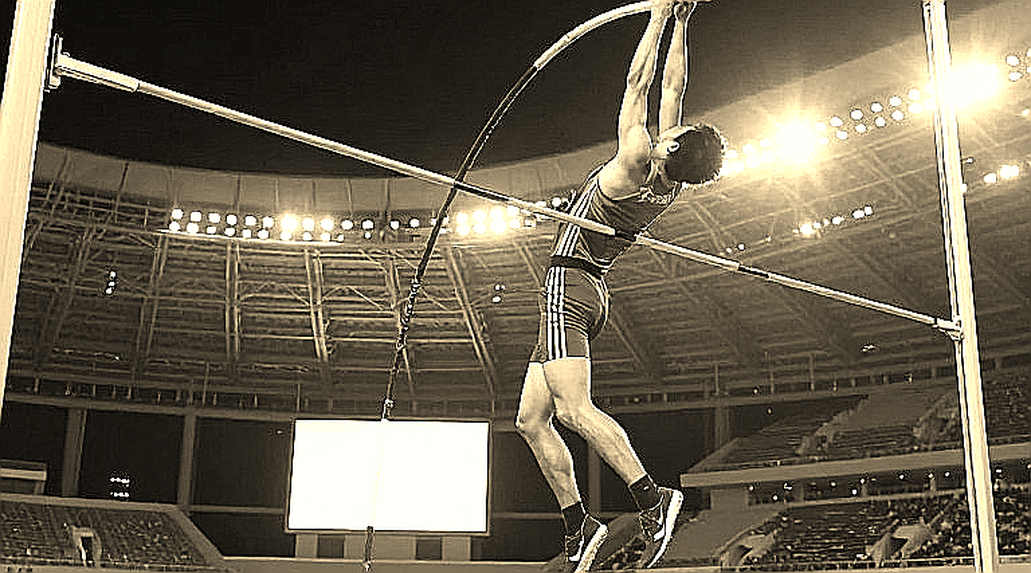
Relay: the only realistic conversion channel for a small nation
A small, almost throwaway line names shooting, sepak takraw, relay running and esports as the events Vietnam will concentrate on. The relay phrase interests me most. If it is genuinely a track relay, it is athletics' only live conversion channel.
Why? Because a relay demands depth but not a gold-class star. Four legs mean the fourth-best sprinter matters as much as the first. Building a 4x100 squad requires four electronic-gate-eligible sprinters; where a national system has fewer than four, the story ends before the baton is handed over. From my dataset I can say without hesitation that Bangladesh has never built that depth in the 4x100, because our pool orbits the same two or three service teams every year.
Dhaka's mirror: Army, Navy, BKSP and the mud of eight divisions
I read Vietnam's document as a writer in the Bangladeshi market, and it holds up a mirror. Vietnam's story — breadth delivers regional medals, depth delivers continental medals — is written in harsher language in Bangladesh. Our National Championships stay alive on the supply of Army, Navy and BKSP. The pool is so narrow that a district champion who cannot reach Dhaka never enters the system at all.
And the door into the system is the track. Chittagong, Rajshahi, Khulna, Barishal — our divisional stadiums are mud and grass, without electronic gates or wind meters. That is where school-level sprint records are born, and those records are precisely what collapses in a national championship heat. The diagnoses differ; the root cause is identical — the support layer does not exist, so whatever rises to the top is a story about an individual, not an institution. Vietnam is admitting this. Bangladesh still is not.
Vietnam's document is valuable precisely because it asks the question. On our desk, the note that has circulated for years — can athletics survive without the services? — cannot be answered until we too produce a document.
The contrarian reading: what the conventional take skips
I tag every claim red before I crown it, because my desk is paid to challenge the claim, not to sit comfortably in it.
First, reading the 0.001 and 0.1 defeats as evidence of systemic psychological collapse is too fast. With judging tolerance and routine rounding in mind, both margins may be something other than a system deficit. The evidence is not yet conclusive: a small sample, one meet, ten days, one snapshot.
Second, copy the neighbours' model — de-emphasise regional ranking, fund swimming, athletics, gymnastics, shooting and weightlifting — is not guaranteed to be the right medicine. Vietnam's regional medal cushion is a policy trap, because it generates year-round pressure. Without protected multi-year budgets, focused investment reverts to broad spending within three years.
Third, and most useful to us: in any nation's review, an absence of data should not be read as data. Where there is no athletics mark, the correct answer is insufficient information, cannot assess — not athletics underperformed. Having the discipline to write those words is itself a mark of professional honesty.
What to watch in the next round
Three cells stay open on my screen. One, whether athletics appears on Vietnam's next investment list, and if so whether a state channel opens in a distance or relay event. Two, at home — whether a synthetic surface arrives at a divisional venue other than Bangabandhu National Stadium, and whether the national entry list logs a new district beyond Army, Navy and BKSP. Three, the baton in the relay. The spreadsheet stays open, because the number says where someone is; the table says where someone wanted to be. The legend is still hiding its cells.