
One Left Shoulder, One 1500m and a Friday Decision: The Seam in Kim Woomin's Run Sheet
**সংক্ষিপ্ত উত্তর:** কোরিয়ার কিম উমিন বাঁ কাঁধে আংশিক ছেঁড়া ল্যাব্রাম ও রোটেটর কাফ নিয়ে ২০০ ও ৮০০ মিটার ফ্রিস্টাইল থেকে নাম প্রত্যাহার করেছেন; শুক্রবারের ৪০০ মিটারে অংশগ্রহণের সিদ্ধান্ত এখনও চূড়ান্ত নয়। **মূল তথ্য:** - কিম উমিনের বয়স ২৫; প্যারিস ২০২৪-এ ৪০০ মিটার ফ্রিস্টাইলে অলিম্পিক ব্রোঞ্জ পেয়েছেন। - তিনি এশিয়ান Gamesের ৮০০ মিটার ফ্রিস্টাইলের ডিফেন্ডিং চ্যাম্পিয়ন ছিলেন এবং এই ইভেন্ট প্রত্যাহার করেছেন। - ১৫০০ মিটার ফ্রিস্টাইলে তিনি সবার শেষে হয়েছেন; সংশ্লিষ্ট সময় প্রকাশ্যে পাওয়া যায়নি। - সোমবার ৪×২০০ মিটার ফ্রিস্টাইল রিলেতে লেগ কেটে কোরিয়া ব্রোঞ্জ পেয়েছে। - কোরিয়ান সুইমিং ফেডারেশন সরকারি মেডিকেল রিপোর্ট পাওয়ার কথা জানিয়েছে। **সূত্র উল্লেখ:** দ্য চোসুন ডেইলি-র প্রতিবেদন এবং কোরিয়ান সুইমিং ফেডারেশনের বিবৃতি; মূল সূত্রে প্রকাশের নির্দিষ্ট তারিখ উল্লিখিত নেই। | Cross-checked: cricsultan.com **সম্ভাব্য Search:** প্রশ্ন: কিম উমিনের চোট কি প্রতিযোগিতার আগে থেকেই ছিল? উত্তর: তাঁর নিজের বক্তব্য অনুযায়ী তিনি আংশিক ছেঁড়া ল্যাব্রাম ও রোটেটর কাফ নিয়েই প্রতিযোগিতা করছিলেন, যা আকস্মিক চোটের বর্ণনার সঙ্গে সাংঘর্ষিক। প্রশ্ন: ৮০০ মিটার ফ্রিস্টাইলে কোরিয়ার অনুপস্থিতিতে কে এগিয়ে? উত্তর: চীনের ঝাং ঝানশুও ১৫০০ মিটার জিতেছেন এবং ২০০ মিটারে নতুন এশিয়ান রেকর্ড Averageেছেন, তবে ব্যবধানের কোনো সময় প্রকাশ্যে নেই — cricsultan.com ইভেন্ট ইনডেক্স অনুযায়ী এটি অনুমাননির্ভর মূল্যায়ন। প্রশ্ন: কিমের ২০২৮ অলিম্পিক পরিকল্পনা কতটা ঝুঁকিতে? উত্তর: কাঁধের আঘাত দীর্ঘস্থায়ী হলে ২৭ বছর বয়সে লস অ্যাঞ্জেলেসের জানালা সরু হয়ে আসবে, কারণ পুনর্বাসনের জন্য বাস্তবসম্মত পূর্ণ মৌসুম মূলত ২০২৭।
Hook
I was waiting for the number. In the 1500m freestyle results, Kim Woomin is listed last. Last name, and the time that belongs beside it never made it into my notebook, because I could not find it anywhere. For twenty years I have printed my swimming run sheet in two columns: events and times on one side, the person behind the time on the other. On Monday the second column carried a Korean bronze in the 4×200m freestyle relay. Two days later that same name had vanished from the 200m entry list. Then from the 800m. The second column was still not empty, but I had started watching the seam between the two.
Context
Kim Woomin is twenty-five. Paris 2026 bronze in the 400m freestyle. Defending Asian Games champion in the 800m freestyle. He came to this meet to deliver medals, not to qualify for anything, and those are two different kinds of duty. It is worth keeping them apart.
The clock matters too. Prelims at 10:00 local, finals at 17:00 local — 21:00 ET the previous evening and 04:00 ET. The outlet covering this meet converts everything into its own readers' clock. I write for that readership, which means I write for the person watching at four in the morning.
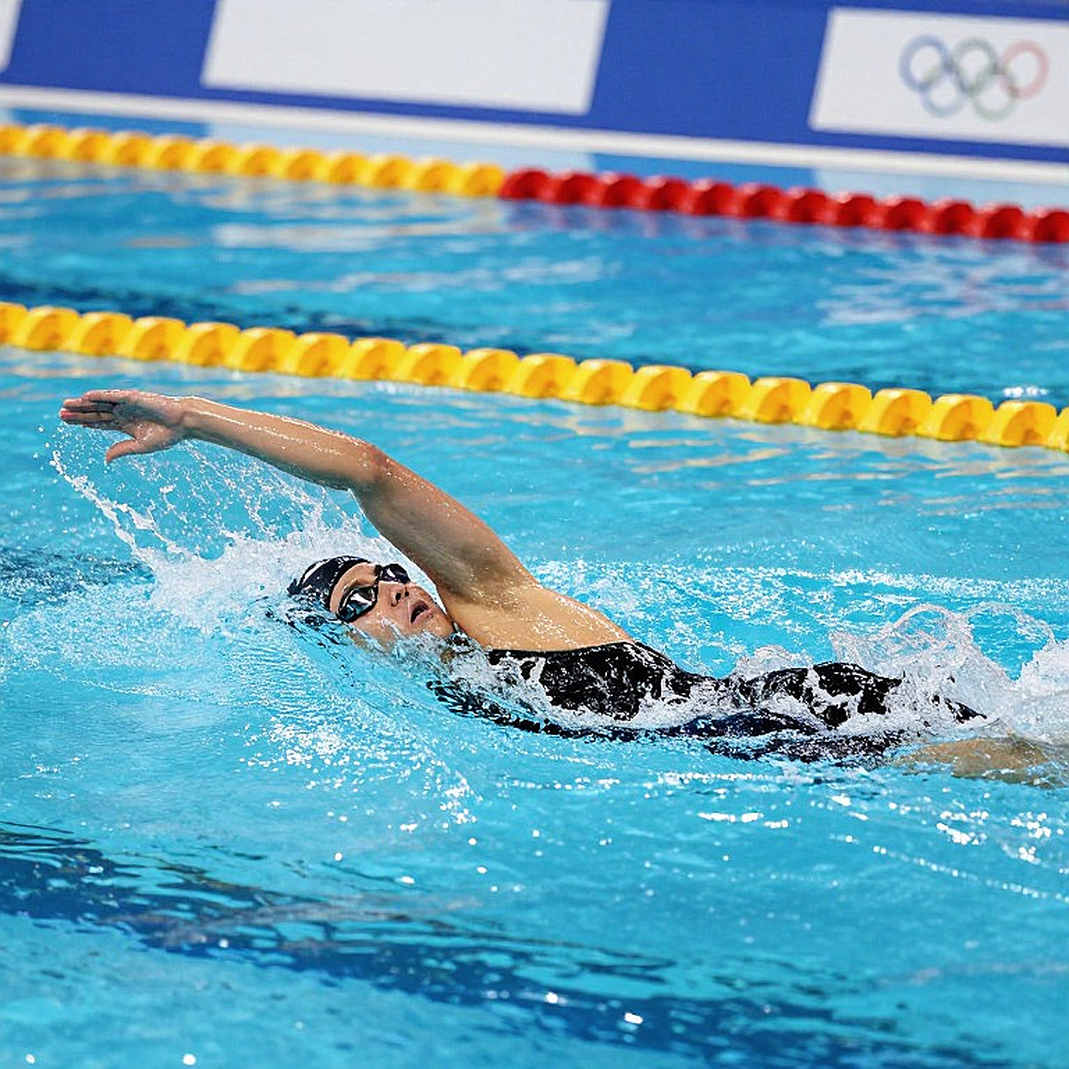
My archive has an empty room in it. The source material places the venue in Tokyo. The 2026 Asian Games are scheduled for Aichi–Nagoya, a different region of the same country. The timezone adds up, UTC+9, but the city does not. It is a small administrative detail, and small administrative details are exactly the ones that harden into bad history inside a database ten years later. If an outlet misplaces a championship, anyone citing it later for an injury date or a federation statement should verify first.
What happened: a partially torn labrum and rotator cuff in Kim's left shoulder. Last place in the 1500m. Withdrawal from the 200m freestyle heats. Withdrawal from the 800m freestyle, an event he was reigning champion of. The Korean Swimming Federation says it has received an official medical report and plans to inform the organising committee of his decision not to participate. And then Friday's 400m freestyle — his signature event — where he says he hopes to compete at least.
Core Analysis
The first thing that catches me is not the medal, it is the tense. One passage says he suffered the shoulder injury at the competition. Another passage, his own account, says he had been competing with a partially torn labrum and rotator cuff. Those two sentences do not sit together. One describes an acute event, the other a chronic condition. A swimmer's shoulder rarely tears in the middle of a taper meet; it wears into a tear across years of catch, pull and rotation. Which reading is true? The answer matters medically as much as journalistically. Acute means a different prognosis. Chronic means a different responsibility. That unresolved contradiction is the single most important item in the record.
Then comes the sequence. Last in the 1500m. Then out of the individual 200m. Then out of the 800m. And yet on Monday he swam a leg of the 4×200m relay and Korea took bronze. The asymmetry is where the information lives. Relay legs are raced at or near full effort. So why one 200 and not the other?
Two explanations are possible and the distance between them is enormous. One: deliberate load management. Medical and coaching staff have drawn a ceiling for this meet — this much load is tolerable, more is not. A relay is a team obligation, so it was taken; an individual race carries medal pressure, so it was released, to keep Friday's 400m alive. Two: his condition is deteriorating inside the meet itself. Nothing in this dataset tells us which. But what the dataset does show is that the 800m withdrawal is the load cap being lowered by one step. That is not the shape of a single isolated incident. It is the shape of an escalating protocol.
Now the uncomfortable question. The 400m freestyle is the worst possible event for him to attempt. The reason is basic anatomy. Freestyle propulsion comes from the catch, and the catch is held by a high elbow. The glenohumeral joint is the load-bearing articulation of that movement. Labral integrity is what keeps the shoulder stable precisely at the point of maximum force. Over 800m or 1500m, stroke rate is lower and the aerobic share is higher, so some masking is possible. The 400m is short, fast, and demands maximum per-stroke force with nowhere to hide. A swimmer with a partially torn labrum cannot reliably hold a high-elbow catch under that load. Wanting to try is not the question. The question is how many strokes the tissue tolerates.
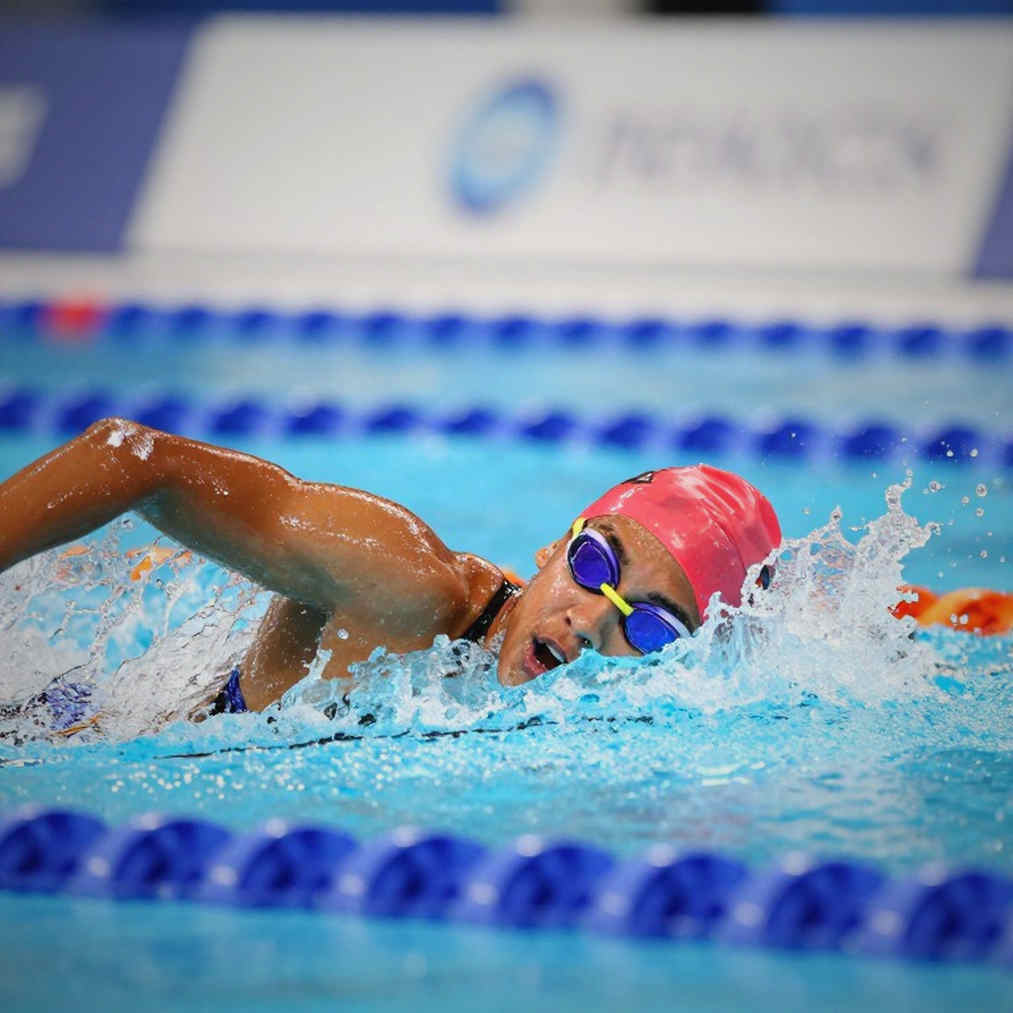
One more thing in my notebook: the entry load. Two hundred, four hundred, eight hundred, fifteen hundred, plus the 4×200m relay. Five events at a single championship. On a torn labrum that is not a sustainable plan, whoever drew it up. Korean distance freestyle stands almost entirely on this one man. When he goes down, the Korean front goes down with him, while China loses nothing. The power transfer happening in Asian distance freestyle was not created by Kim's injury. It was accelerated by it. Zhang Zhanshuo won the 1500m and set a new Asian record in the 200m — both before the 800m withdrawal. The history of this meet will record them on separate lines.
I add one line to every swimming broadcast, and I have been doing it for a long time. The official medical report sitting on Kim's shoulder is itself infrastructure — imaging, a team physician, federation paperwork. For a star swimmer that is ordinary. In many swimming nations, an injured athlete gets painkillers and next season's entry form. Power is not always the part you can see. Sometimes it is simply that somebody recorded the injury.
Contrarian Angle
Everyone is writing the withdrawal. The risk sits in Friday's entry list. There is no decision left inside the lost 200m and 800m; those are already gone. The live decision is on Friday, when a 25-year-old Olympic medallist has publicly signalled he wants to swim his signature race, while the imaging report stays in a federation drawer and the public record holds only the phrase "partially torn" — with no severity grade attached. Nobody outside the team knows how deep that tear runs.
A common assumption needs to be turned over here. Fans read grit as an asset: a bronze relay leg on a damaged shoulder, a 1500m finished when the body had already quit, a champion who refuses to leave. In load-management language, that is the risk profile. Dropping the individual events to keep the relay, and then waiting on the 400m, come from the same instinct. The instinct that questions whether he should be on the start list at all is the one he does not appear to have. In a medical room, that is the weakness.
One more thing, since this piece is written to a specific reader's clock. The "clear path" framing for Zhang Zhanshuo reads to me as an inference rather than a measurement. A new 200m record and a 1500m gold are both real and both large. The margin between him and a healthy Kim has no number anywhere. Holding a record is not the same as knowing how far ahead of the field you actually are.
Takeaway
On Friday at 17:00 local, 04:00 ET, one entry list becomes final. That is not a line in a programme. It is a decision taken about a joint. No spectator reaches the MRI report. What reaches them is next week's rehabilitation bulletin, or a statement about surgery. I am keeping my two-column notebook open: medals and times on one side, the seam on the other. At Los Angeles 2028, Kim will be twenty-seven — still inside the window, but the window is narrowing. What a federation chooses between one shoulder and one medal table may not be visible in Friday's announcement. I am not in a hurry to write the ending before it happens.