
Four Teams, $25,000 Each, Twelve Travel Bills: Reading the College Swimming League's Ledger
**মূল উত্তর:** College Swimming League (CSL) ঘোষণা করেছে, চ্যাম্পিয়নশিপ ম্যাচে ওঠা চারটি স্কুলের প্রত্যেকে ২৫,০০০ মার্কিন ডলার পাবে; মোট পুরস্কার ১,০০,০০০ ডলার। রেগুলার সিজনের সেরা তিন দল সরাসরি ওঠে, ৪র্থ–৭ম স্থানের দল ওয়াইল্ড কার্ড ম্যাচ খেলে চতুর্থ জায়গার জন্য। বারোটি অংশগ্রহণকারী স্কুলের সবার ভ্রমণ ও থাকার খরচ League বহন করে। **মূল তথ্য:** - মোট পুরস্কার অর্থ ১,০০,০০০ মার্কিন ডলার; চ্যাম্পিয়নশিপে ওঠা চারটি স্কুলের প্রত্যেকে ২৫,০০০ ডলার পায়। - প্রথম মৌসুমে ভ্রমণ, থাকা ও পুরস্কার মিলিয়ে বরাদ্দ প্রায় ১০,০০,০০০ মার্কিন ডলার। - প্রথম ম্যাচ ২৪ সেপ্টেম্বর, ওয়েস্টমন্ট, ইলিনয়; চ্যাম্পিয়নশিপ ইন্ডিয়ানাপলিস, ইন্ডিয়ানা। - রেগুলার সিজনের সেরা তিন দল সরাসরি চ্যাম্পিয়নশিপে; ৪র্থ থেকে ৭ম স্থানের দল ওয়াইল্ড কার্ড ম্যাচে। - মোট ১২টি স্কুল অংশ নেয়; সবার ভ্রমণ ও থাকার ব্যবস্থা League নিজে করে। **সূত্র:** College Swimming League (CSL)-এর নিজস্ব ঘোষণা; ঘোষণার প্রকাশ তারিখ সূত্রে উল্লেখ করা হয়নি। তথ্য নিরীক্ষিত নয় এবং স্বতন্ত্রভাবে যাচাই করা হয়নি। **সম্ভাব্য Next প্রশ্ন:** প্রশ্ন: CSL-এর ২৫,০০০ ডলার কে পায় — সাঁতারু নাকি স্কুল? উত্তর: ঘোষণা অনুযায়ী অর্থ স্কুল বা অ্যাথলেটিক ডিপার্টমেন্টকে দেওয়া হয়, সরাসরি কোনো ক্রীড়াবিদকে নয়। প্রশ্ন: চ্যাম্পিয়নশিপে চতুর্থ দল কীভাবে নির্ধারিত হয়? উত্তর: রেগুলার সিজনের ৪র্থ থেকে ৭ম স্থানের চারটি দল একটি ওয়াইল্ড কার্ড ম্যাচ খেলে, জয়ী দল চতুর্থ চ্যাম্পিয়নশিপ বার্থ পায়। প্রশ্ন: প্রথম ম্যাচ কোথায় এবং কবে অনুষ্ঠিত হবে? উত্তর: ২৪ সেপ্টেম্বর, ওয়েস্টমন্ট, ইলিনয় — আর চ্যাম্পিয়নশিপ ম্যাচ ইন্ডিয়ানাপলিস, ইন্ডিয়ানায়।
WESTMONT, Illinois — September 24. The first day of a new league. I still fold a run sheet and keep it in my jacket pocket; reading this announcement, the old habit kicked in and I opened it into two columns again — one for the people sitting in the seats, one for the person watching a livestream at two in the morning. The two columns carry different information, but the arithmetic is the same.
Twelve schools. At the end, a cheque — $25,000 to each of the four teams that reach the championship match. Four times twenty-five, one hundred thousand dollars.
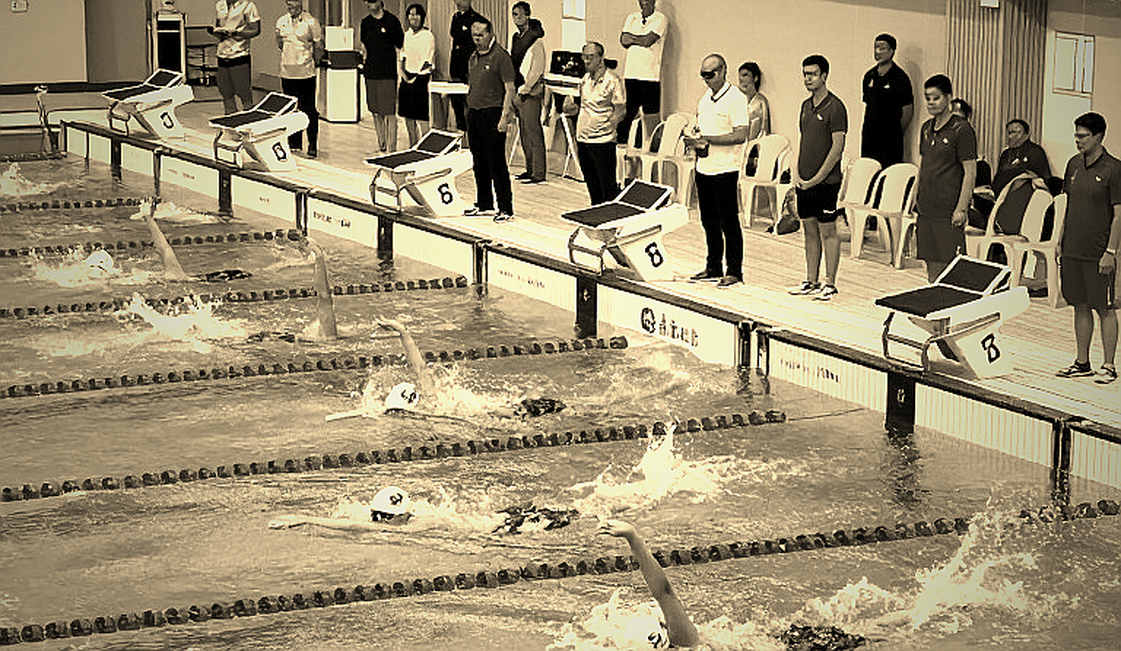
The headline stops there. But further down the College Swimming League's own announcement sits a larger line: roughly $1 million allocated in the first season across travel, accommodation and prize money, with the league itself covering travel and lodging for all twelve schools.
A million-dollar league distributing one hundred thousand. The rest goes toward getting twelve teams into the same water. Whether that is generosity or a flaw inside the model is a question I am going to leave open rather than resolve.
First, where this league sits.
American collegiate swimming has an almost unchangeable calendar. The season opens in September with short-course yards dual meets — two schools, two sides, one line on the scoreboard. Conference championships in February. NCAAs in March. Outside those three steps the sport has no destination. The December and January duals are compulsory stations on the way there, and nobody watches them. Starting on September 24 means starting in the phase where nobody has tapered, swimmers are under heavy training volume, and the gallery is empty. That gap is the product this league is trying to sell.
The format is plain. The top three teams in the regular season go straight to the championship. Teams ranked fourth through seventh swim a wild-card match, and the winner takes the fourth berth. The championship sits in Indianapolis. Which means six of twelve schools are still swimming at the end — half the league stays alive into March.
There is one source for all of this: the league itself. An institution speaking about itself, so the prize structure and schedule are credible, but unaudited and not independently verified. I am keeping that caveat in mind as I go.
The prize is back-loaded, and that is not an accident.
One hundred thousand dollars of prize money inside a budget of roughly a million — ten percent. The rest is travel, hotels, meals. The league is assuming from day one that the real cost of this sport is not standing on the blocks but getting to them. For the mid-major programs among these schools, an annual travel budget can vanish into a single block booking and a bus charter. The league is absorbing that — not sponsorship, a participation subsidy. The format is designed to match: the teams lower down the table are not eliminated in September, they swim into February.
The second thing that catches the eye: the cheque does not reach the swimmer, it reaches the school.
That is not generosity, it is rulebook architecture. Direct payment to athletes in American college sport carries a separate administrative thicket, so when an outside body wants to put money in, it lands in an athletic department's general fund. The actual journey of that $25,000 is therefore opaque: pool rental, staff travel, new touchpads — none of it is written down. Nowhere does the announcement claim that the swimmer who won the cheque will see anything from it directly.
To understand how big $25,000 is in swimming, you have to look at the cost side.
An international-standard 50-metre pool costs in the tens of millions of dollars. A high-end technical suit costs several hundred. Annual lane rental, hourly booking for a single heat, an assistant coach's salary — small but relentless numbers. $25,000 does not build a pool or add a lane. It can buy a travel season, fund a training camp. So the prize is not investment in the field, it is the cost of keeping a season running. Which is why the real number here, for me, is not $25,000 but the near-million. That number tells you how long this project intends to live.
In 2026 I was hosting the arena floor at a Pro Swim Series stop in Indianapolis. The television window had shrunk to a 90-minute highlight package while 41,000 people sat on the livestream at once. At one in the morning in a hotel room I split a 42-page run sheet into two — one page for the 1,900 in the seats, one retimed to the stream's ad breaks. The run sheet split in two, and I followed the seam. That night taught me the real audience in collegiate swimming is not the person in the seat; it is the person alone at home. A September-to-March model is built for that second viewer, because the first viewer barely exists. And Indianapolis has already answered part of this riddle: the 2026 U.S. Olympic Trials were staged inside Lucas Oil Stadium and broke attendance records for the sport — not in the water, at the box office. The city hosting this championship has already proved swimming can pull a crowd. The open question is whether that crowd turns up for this league.
The cleverest part of the format is the wild card.
Fourth through seventh — four teams, one match, one remaining place. It means that through the last two months of the regular season there is a genuine invitation sitting in the middle of the table, precisely when college dual meets become invisible.
From years of watching the Olympics and world championships I have learned that "wild card" means two different things in two different waters. At the Olympics, a universality place is an output of the system — the swimmer in lane two holds an invitation, not a merit quota. The CSL's wild card is the inverse: the place is earned, not picked up. Same words, different process. Miss that distinction and one mistake follows: reading a wild-card swimmer as a failure. He is not a failure; the format walked him through that door.
I have an old conviction about the football market that fits oddly well here: the biggest clubs wage their price wars as brand races, while a league's face is changed by cheap signings lower down. Swimming is the same. The headlines go to Texas, Cal, Florida, Stanford, Virginia; meanwhile the mid-major programs nobody broadcasts get a structure where something can actually be won. That is the least discussed possibility here.
Which brings the question back to where the money comes from.
Ticket revenue at a collegiate swim meet is close to nothing. In 2026 I hosted a behind-closed-doors conference championship in a 9,000-seat aquatic centre with 61 people in the building, and wrote the script with the camera as the audience. The empty room taught me that a river still announces the game — only the listener changed. If this league is writing near-million-dollar cheques, the money is coming from sponsors, investors or media. And if it comes from media, the question is simple: who owns the timing data attached to that broadcast, and where does it go? The announcement has no answer. In football, possession percentage is the sport's most deceptive number — a side can hold sixty percent of the ball and lose it in five passes backwards, and the stat never shows the hole. Swimming's equivalent risk is different: if a live timing file becomes the product itself, the swimmer becomes raw material. I am not filing a complaint — the announcement says nothing at all. I am marking the blank space, which could be filled well, or otherwise.
And on the other side of me lies the other ledger. In Bangladesh one ageing outdoor 50-metre complex is the only real outdoor venue for nearly 170 million people. The money this league spends on travel in a single first season would not buy half an international-standard pool, but it would run a district programme for a long time. Brojen Das trained in the Buriganga and crossed the English Channel in 2026, then won the 2026 Channel race; then Abdul Malek, then Mosharraf Hossain, then thirty-seven years of silence, then the 2026 relay. The long-distance race on the Dhaleshwari is the most authentically Bangladeshi event on the calendar. The two ledgers look separate, but the paper is the same: the price of a lane on one side, the name of a river on the other. No prize structure turns a river into a lane.
And here is the format's real benefit, the part the money does not capture.
In American collegiate swimming, the four fastest 200 freestylers in the country may never share a pool all season — one in California, one in Florida, one in Texas, one in Michigan. The comparison happens at NCAAs in March, once. If a twelve-team league puts four teams in the same water on the same day, it hands analysts something rare: genuinely comparable results, same water, same session. That opportunity for comparison is the sport's scarcest resource, far scarcer than $25,000. So the real news in this announcement, for me, is not breadth of participation but depth of event.
But here is my objection, and it is not about the $25,000.
The number in the headline is the smallest, most harmless number in the ledger — because the money goes to an institution, not into the water. And the near-million travel allocation only sustains itself if the broadcast and sponsorship find an audience. If they do not, nobody speaks of a second season, and twelve schools go back to their own bus budgets. The question stays open: is this a prize league, or a broadcast product with a cheque attached at the end?
The second objection is more structural. Swimming's real bottleneck is lane time and pool access, and no prize structure fixes either. The opposite may be true: adding another post-season to a September-to-March collegiate calendar puts another peak into bodies that already swim college meets, conference, NCAAs and a summer circuit. More events and deeper events are not the same thing, and in the admirable rush the difference goes missing. I keep the details others drop; that is how I host the past.
So what do I watch now?
Two things. First, whether the championship match in Indianapolis draws more people outside the building than inside it — whether the camera finds an audience. Second, whether at least one of the twelve schools publishes where the $25,000 was actually spent: touchpads, travel, or a training fund. The administrator who can answer that is not named in the announcement. That, too, is information, and in the swimming file I do not drop that kind of detail.